


Knowing how to measure a sofa properly is important if you want your new sofa to fit without problems. Taking time to check the right dimensions can save you the hassle of failed deliveries or a sofa that feels too big once it’s in place.
This guide will take you through each step, from measuring your room and checking sofa dimensions to making sure it clears doorways and staircases.
The Key Things to Know When Measuring a Sofa
- The size of your room, including floor space, windows, and ceiling height
- The sofa’s main dimensions: Width x Height x Depth (WxHxD) and seat size
- Access routes like doors, hallways, and stairs
- Clearance for comfort, layout, and other furniture
Step 1: Measure Your Room First
When measuring a sofa, we recommend beginning with the full size of the room. Note down the wall-to-wall length and width with a tape measure, and measure the height from floor to ceiling. If the sofa will sit under a window, record the height from the floor to the bottom of the windowsill too.
Next, measure the distance between existing furniture and any fixed features like fireplaces, alcoves, or radiators. This tells you how much space is actually usable. Pay attention to walking routes through the room because a sofa that blocks movement quickly becomes impractical.
Finally, test out the footprint. Lay masking tape or sheets of newspaper on the floor in the size of the sofa you’re considering. Stand back and see how it looks in relation to the rest of the room. This shows whether the proportions feel right when in comparison with the other furniture in the room.
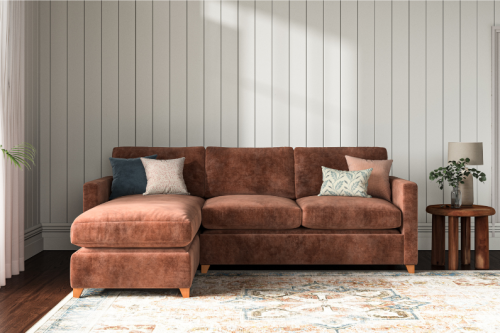
Step 2: Check the Sofa’s Key Dimensions
Once you know how much space you have, turn to the sofa itself. Pay close attention to these core measurements:
- Width (arm to arm): This is usually the longest measurement and the one that causes the most issues with delivery and room fit.
- Height (floor to top): Useful for checking if the sofa will sit comfortably under windowsills, shelves, or wall lights.
- Depth (front to back): Tells you how far the sofa will extend into your room. Deeper seats can feel cosy but may dominate smaller rooms.
- Seat depth and height: These don’t just affect comfort but also how the sofa feels within the room. Deeper seats often suit lounging, while shallower seats fit better in more compact rooms.
Always write these numbers down and keep them handy. Comparing them directly to your room measurements makes it easier to avoid surprises, especially if you’re choosing between different types of sofas, like a corner sofa, chaise sofa, or a sofa bed.
Step 3: Measure Doorways, Hallways, and Stairs
Even if the sofa suits your room, it still needs to get inside. Measure every access point the delivery team will use:
- Front door: Measure the width and height of the doorway, including the frame. Don’t forget handles, skirting boards, or anything that reduces clearance.
- Hallways and corridors: Note their width and height, and look out for radiators, shelves, or tight corners that could make manoeuvring difficult.
- Staircases: Measure the width of the stairs, ceiling height above, and any turns or landings. Sofas with removable legs, cushions, or arms can make this easier.
- Lifts (if you live in a flat): Check the internal dimensions as well as the door opening size
A good rule of thumb: compare the narrowest part of your access route with the smallest measurement of your sofa (often the depth or height). If the sofa can clear that point, it should be able to get through.
Step 4: Allow Space for Comfort and Flow
It’s easy to focus only on whether a sofa fits into a room, but how it sits within the space is just as important. Once you’ve checked the main dimensions, think about how the sofa will work day to day.
- Leave walking space: Aim for at least 60–80cm of clearance around the sofa so people can move freely.
- Think about other furniture: Measure the gap you’ll need for a coffee table, side tables, or footstools without the room feeling cramped.
- Consider door and drawer openings: Make sure the sofa won’t block doors, cupboards, or storage units when in use.
- Factor in recliners or sofa beds: If you’re choosing a sofa bed or a reclining model, measure the extra length needed when it’s fully extended.
Step 5: Double-Check Before You Buy
Before placing your order, go back over all your measurements. Compare the sofa’s dimensions against your room size, access routes, and the clearances you’ve allowed for comfort.
It’s also worth checking the product details carefully. Many sofas list their measurements with and without removable legs or cushions, which can make a big difference on delivery day. If you’re unsure, contact the retailer to confirm exact dimensions.
Taking a few extra minutes to double-check avoids the stress of delivery issues and gives you confidence that your new sofa will fit perfectly in your home.

Measuring for Different Sofas
Not all sofas are shaped the same, and some designs need extra checks to make sure they work in your room.
- Corner sofas: Corner sofas use more floor space than standard designs, so measure both walls and check the overall footprint. Make sure the corner won’t block windows, doors, or heating vents.
- Chaise sofas: A chaise sofa extends further forward, so measure the depth carefully to ensure it doesn’t stick out into walkways.
- Sofa beds: For sofa beds, we always recommend that you check the extended length when the bed is pulled out. Ensure there’s enough space for both the sofa and the mattress to be used comfortably.
- Modular sofas: Modular sofas arrive in sections, which makes delivery easier, but you’ll still need to measure how the final layout will fit into your room.
Final Checks Before Choosing Your Sofa
Taking the time to learn how to measure a sofa, your room, doorways, and hallways makes the whole process of buying a new sofa easier.
Now that you know how to measure a sofa, you’re ready to think about buying a new sofa. At Willow & Hall, all of our luxury sofas and luxury sofa beds come with clear measurements to make planning easier, so you can focus on finding the design that fits your home. If you’d like some advice on finding that perfect fit for your home, you can contact us, and we’ll help you decide.