

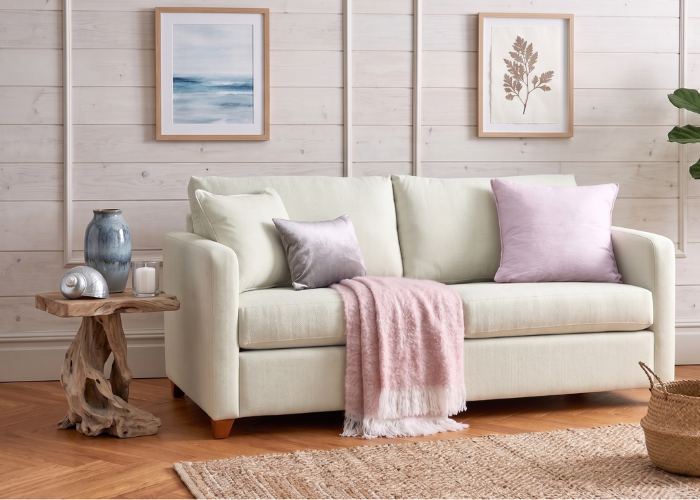
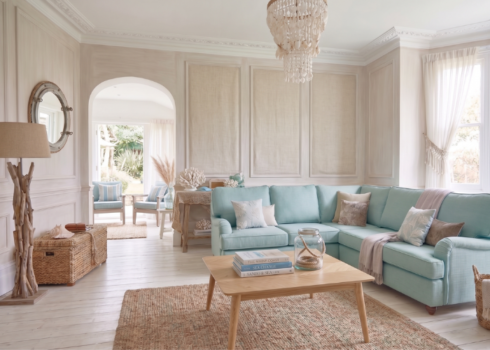
The Downton Corner Sofa Bed
Coastal interior design is a timeless style. It creates a home that feels calm, uncluttered and easy to live in, built around soft palettes, natural textures and plenty of light.
If you're drawn to this look but aren't sure where to start, our guide walks through what coastal interior design actually means, the principles behind it, and ten coastal living room ideas you can use to bring the feeling of the seaside into your own home.
What Is Coastal Interior Design?
Coastal interior design takes its cues from the colours, textures and light of the seaside, without tipping into novelty nautical decor. Think driftwood rather than ship's wheels, linen rather than deck stripes on every cushion. It's built around a soft, breathable colour palette of off-whites, sandy neutrals and blues, layered with natural materials like wood, rattan and jute, and finished with plenty of natural light.
Done well, coastal design works just as beautifully in a Victorian terrace in the city as it does in a beach house. It's a feeling more than a location.
Design Features of Coastal Interior
Before you start choosing furniture and accessories, it helps to understand the handful of principles that tie a coastal scheme together.
A Soft, Sea-Inspired Colour Palette
Coastal colour schemes are built on a neutral base. Think chalky white, sand and soft grey, layered with tonal blues that echo the sea, from pale powder blue through to deeper denim and navy. Greens borrowed from beach grasses and muted driftwood tones can be introduced in smaller doses through cushions, art or accessories.
Natural Materials and Texture
Rattan, jute, seagrass, linen and light woods bring warmth and depth to a coastal room, stopping it from feeling flat or overly matched. Texture does a lot of the work here. For example a woven rug, a linen-look sofa fabric and an oak side table can sit together beautifully even within a fairly restrained colour palette.
Plenty of Natural Light
Coastal rooms feel light and airy rather than heavy or dark. Sheer or lightweight curtains, mirrors that bounce light around the room, and pale walls all help recreate that bright, breezy seaside feel indoors.
Furniture With Clean, Relaxed Lines
Ornate, heavily detailed furniture works against a coastal scheme. Instead, look for simple, comfortable silhouettes, such as a relaxed sofa, a low-slung armchair or a footstool with clean lines. These let the room feel open and unfussy.
10 Coastal Living Room Ideas to Try at Home
With those principles in mind, here's how to put them into practice in your own living room.
1. Start With a Sandy, Sea-Inspired Base Palette
Begin with your largest surfaces, including walls, flooring and your sofa, in soft neutrals like off-white, warm sand or pale stone. This gives you a calm foundation to build on and means bolder blues or greens introduced later always have somewhere restful to land.
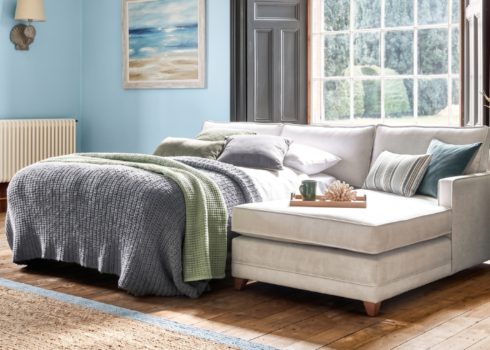
The Aldbourne Chaise Sofa Bed in Stone
2. Choose a Sofa That Feels Relaxed, Not Rigid
Your sofa sets the tone for the whole room, so look for a shape with soft, generous proportions rather than a stiff, formal silhouette. A chaise sofa or a comfortable corner design in a linen-look or textured weave fabric instantly reads as coastal, especially in shades like soft stone, nimbus grey or nordic blue.
Because a sofa is such a long-term investment, it's worth choosing one that can be tailored to your space and made in a fabric you love, rather than settling for an off-the-shelf option in the wrong tone.
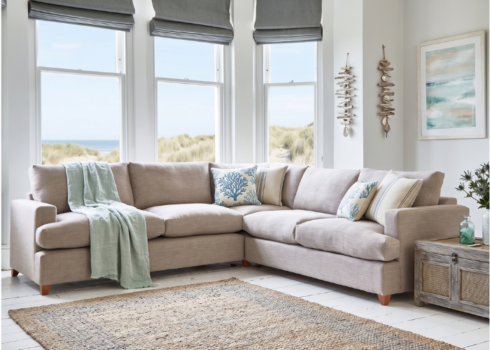
The Fyfield Corner Sofa Bed
3. Bring In Blue as Your Accent, Not the Whole Story
Rather than decorating around a single ‘beach blue’, layer in two or three tones. A pale powder blue cushion, a deeper denim throw or a navy lampshade can make the colour feel more considered rather than one-note. Repeating these blues in small details around the room, from artwork to ceramics, helps everything feel connected.
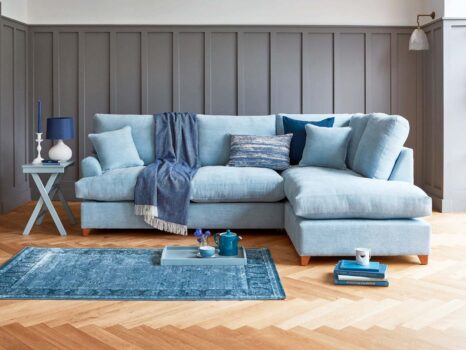
The Alderton Chaise Sofa Bed in Nordic Blue
4. Layer in Natural Textures
Introduce rattan, linen or wicker in an armchair or lampshade, a jute or seagrass rug underfoot, and light, natural wood in your coffee table or sideboard. These materials add warmth and tactility, and stop an all-neutral scheme from feeling cold or flat.
5. Maximise Natural Light With Soft Window Treatments
Lightweight linen curtains or simple woven blinds let daylight filter through rather than blocking it out. If privacy allows, hanging curtains slightly wider and higher than the window frame lets more light flood in when they're open, which is a simple trick for making any room feel brighter and airier.
6. Add Subtle Stripes and Woven Detailing
A classic blue-and-white stripe, whether on a cushion, a runner or an armchair, is one of the quickest ways to nod to the coast without resorting to anything twee. Keep it to one or two pieces in the room so it reads as a considered detail rather than a theme.
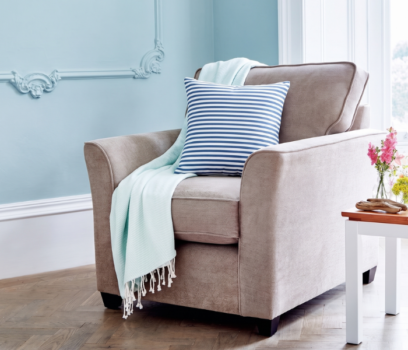
The Elmley Armchair
7. Choose Furniture With Clean, Timeless Lines
Look for simple silhouettes over ornate detailing, a low-arm sofa, a footstool that doubles as extra seating, or a sideboard with clean, unfussy lines. This is what allows a coastal room to feel elegant rather than themed, and it's also what makes the look easy to live with for years rather than a single season.
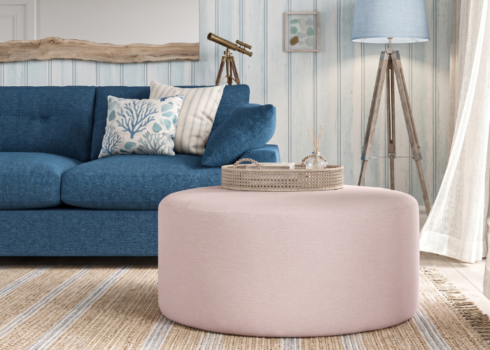
The Bower Footstool
8. Use Light Wood Tones Throughout
Oak, ash and other light woods echo driftwood and bring warmth to a predominantly neutral scheme. A wooden sideboard gives the eye somewhere to rest and adds a natural counterpoint to softer upholstered pieces.
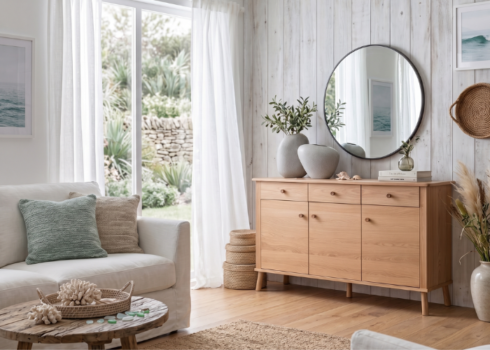
9. Keep Accessories Considered, Not Cluttered
A coastal room should feel calm rather than busy. Choose a handful of well-chosen accessories, such as ceramics, a piece of driftwood, textured cushions, simple artwork, rather than filling every surface. Fewer, better pieces will always look more elegant than a shelf full of seaside trinkets.
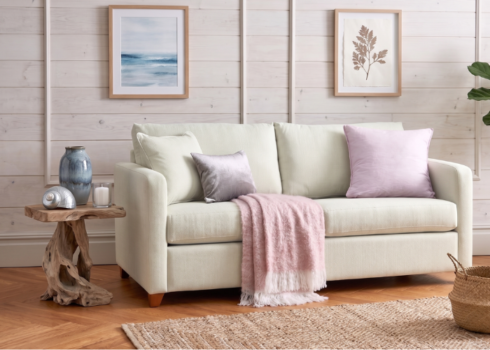
The Foxham Sofa
10. Anchor the Room With a Natural-Toned Rug
A jute, wool or wool-blend rug in a soft neutral or blue tone helps ground the seating area, especially if you're using it to define a zone within an open-plan space. Choosing a rug that's large enough to sit under the front legs of your sofa and chairs will make the whole layout feel more intentional.
How to Choose the Right Sofa for a Coastal Living Room
Because your sofa is the largest and most-used piece in the room, it's worth spending a little more time getting it right. For a coastal scheme, look for fabrics with a natural, linen-like texture or a subtle woven finish in tones such as stone, nimbus or soft blue, rather than anything glossy or heavily patterned. A chaise or corner design works particularly well if you want to create a relaxed, sociable layout, while a classic two-seater or three-seater suits smaller rooms without overwhelming the space.
It's also worth thinking beyond the fabric itself. The right seat cushion filling can affect how relaxed or supportive a sofa feels day to day, and if you ever need extra sleeping space, a well-made sofa bed in the same soft, coastal-friendly fabrics means you don't have to compromise on style for practicality.
Bring Coastal Style Home With Willow & Hall
At Willow & Hall, every sofa, sofa bed, armchair and footstool is handcrafted in our British workshop and made to order, so you're never limited to whatever happens to be in stock. With over 150 fabrics to choose from, including linen-look weaves and textured basket weaves in soft, coastal-friendly shades of stone, nimbus and blue, it's easy to build a living room that feels genuinely tailored to your space rather than picked from a limited seasonal range.
If you're planning a coastal refresh, our free fabric sample service lets you order up to eight fabrics to see how the colours and textures work in your own light before you commit. And because every piece is handmade to your specification, from the seat cushion fillings to the finish of the frame, you can create a coastal living room that's built to last, not just to trend.
2 Comments