

Your bedroom should be the one place in your home where the outside world doesn't follow you in. But if it feels more chaotic than calm, with cluttered surfaces, awkward furniture and a general sense of something being off, it's worth looking at the space more intentionally.
Bedroom feng shui is one of the oldest frameworks for doing exactly that. Rooted in over 3,000 years of Chinese philosophy, it's a practical approach to arranging your room so that energy flows freely, rest comes easier, and the space genuinely feels like yours.
At Willow & Hall, we've spent years helping people create bedrooms they actually love coming home to - and feng shui principles sit naturally alongside that expertise. This guide walks through how to feng shui your bedroom, from where to position your bed to the colours, materials, and common mistakes that can make or break the atmosphere.
What is Feng Shui?
Feng shui is an ancient Chinese practice concerned with how energy - known as 'Chi' - moves through a space, and how that movement affects the people living in it.
The idea is that when a room is arranged well, energy flows freely, and you feel it. When it's blocked, by clutter, poor furniture placement, or harsh colours, the space feels harder to be in, even if you can't immediately put your finger on why.
In the bedroom specifically, good feng shui is less about following rigid rules and more about creating the conditions for genuine rest. Better sleep, lower stress, and a room that feels like a refuge rather than an afterthought.
The Difference Between Good and Bad Feng Shui
Walk into a room with good feng shui and you'll feel it before you can explain it. You’ll feel a sense of ease, of things being in their right place. Walk into one with bad feng shui and that feeling inverts. Something is off, the space feels heavy or unsettled, and no amount of tidying seems to fully resolve it.
The difference lies in how Chi, or energy, is able to move through the room. Clutter stops it. Poorly placed furniture redirects it in ways that create tension. Colours that are too harsh or stimulating disturb it.
In the bedroom especially, where the goal is rest and restoration, bad feng shui has real consequences, whether that’s disrupted sleep, lingering stress or a room that never quite becomes the sanctuary it should be.
Feng Shui Tips for Bedrooms
Bedrooms that allow energy to flow freely can lift your mood and contribute to a healthier state of mind. Follow our tips below on how to arrange a Feng Shui bedroom to create serene and uplifting vibes.
1. Place Your Bed in the ‘Commanding’ Position
The placement of your bed is the single most important Feng Shui decision you'll make in your bedroom. Your bed should be in the 'commanding position', a spot where you can clearly see the bedroom door while lying down, but are not directly in line with it.
Ideally, the headboard should rest against a solid wall, with the bed positioned diagonally across from the door. Facing south is considered particularly auspicious in Feng Shui, though the commanding position principle takes priority.
Avoid placing your bed directly under a window, as this allows too much energy to escape and can leave you feeling unsupported during sleep. If the only workable layout puts your bed under a window, a strong, solid headboard can help compensate by creating a sense of structure and backing.
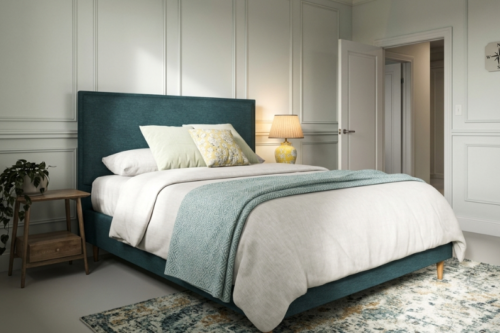
The Liddington Bed in Stain Resistant Cotton, Capri
2. Avoid the Coffin Position
One of the most important rules in Feng Shui is to avoid what is known as the 'coffin position'. This is a placement where your feet point directly out of the bedroom door while you sleep. This is considered highly inauspicious, as it mirrors the way a body is carried out of a room, and is believed to drain energy and disturb rest.
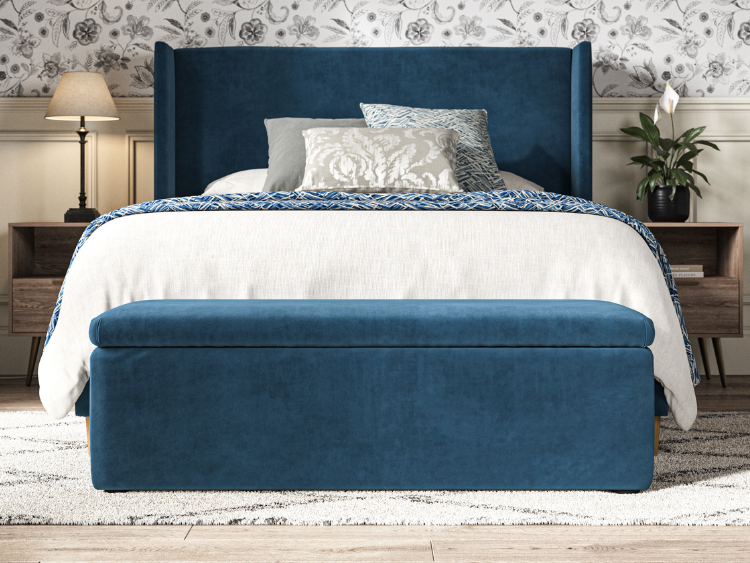
If your room layout makes it difficult to avoid this entirely, a simple remedy is to place a footboard on your bed, or position a piece of furniture such as an ottoman or blanket box at the foot of the bed to act as a symbolic barrier. Keeping the bedroom door partially closed at night can also help redirect the energy flow.
3. Get a Solid Headboard
A solid, well-constructed headboard is a cornerstone of good Feng Shui in the bedroom. It symbolises stability, protection, and support, both in your daily life and in your relationships.
The best headboards are sturdy, securely attached to the bed frame, and sit flush against the wall. Opt for soft, rounded edges where possible, as sharp corners can create what Feng Shui practitioners call 'cutting energy', which disrupts the calm atmosphere you're trying to achieve.
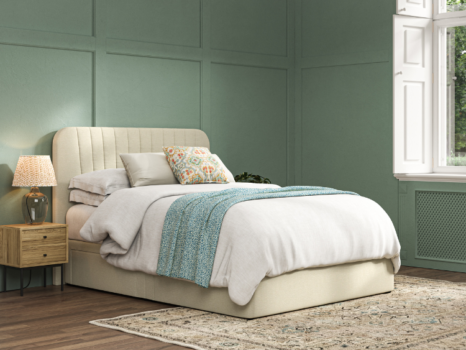
The Boscombe Headboard in Stain Resistant Broad Weave Linen, Oat
4. Create Symmetry with Balanced Bedside Tables & Lamps
Symmetry is a key principle in Feng Shui bedroom layout. Placing a bedside table and lamp on either side of the bed creates visual and energetic balance, encouraging a smooth and even flow of Chi throughout the room. The tables don't need to be identical, but they should be complementary in scale and height.
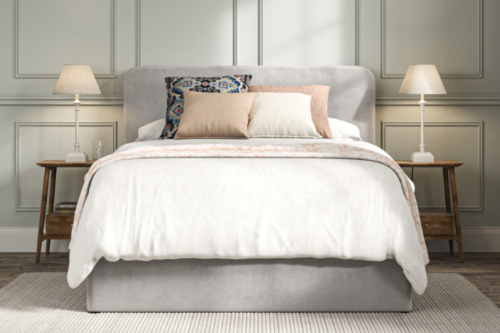
The Haydon Divan Storage Bed in House Velvet, Whisper
This balanced arrangement symbolises harmony and mutual support, particularly important for couples, as it fosters a sense of equality and connection. For single sleepers, symmetrical bedside tables are still recommended, as they signal openness to partnership and create a more grounded, peaceful environment.
5. Declutter Your Bedroom (Including Under the Bed)
Decluttering is one of the most impactful steps you can take for good Feng Shui. A clean, organised space allows Chi to flow freely, while clutter blocks energy and contributes to feelings of stress, overwhelm, and restlessness.
Pay particular attention to the space beneath your bed. In Feng Shui, this area directly influences how you feel during sleep. Ideally it should be completely clear to allow energy to circulate evenly around you as you rest. If you do need to store items there, be mindful about what you keep. Avoid shoes (which subconsciously evoke movement and restlessness), luggage (which projects a feeling of always being on the go), and emotionally charged objects. Soft, sleep-related items such as spare bedding, pillows, and blankets are the most acceptable choice.
Beyond the under-bed area, tidy surfaces, clear bedside tables, and an absence of excess furniture all contribute to a sense of openness and calm.
6. Use Smart Hidden Storage
The right furniture makes keeping a clutter-free bedroom far easier. An ottoman-style storage bed conceals extra bedding, seasonal clothes, and personal belongings beneath the mattress, keeping the visible space clean and open without sacrificing practicality.
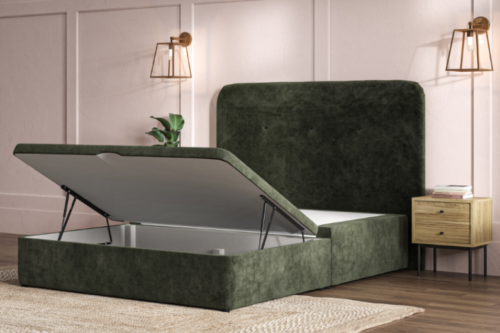
The Hodson Ottoman Storage Bed in House Velvet, Hunter
7. Place Mirrors with Care
Mirrors can be a powerful tool in Feng Shui bedroom design, but their placement matters enormously. The most important rule is to avoid positioning a mirror so that it directly faces your bed. A mirror reflecting your sleeping form is believed to cause restless sleep and excessive, unsettled energy in the room.
Similarly, avoid placing a large mirror directly opposite the bedroom door, as this can bounce energy straight back out of the space. The best position for a bedroom mirror is on a wall perpendicular to the door, where it can reflect natural light and add a sense of spaciousness without disrupting the restful energy of the room. Opt for soft, rounded edges rather than sharp corners, and make sure it reflects something pleasant such as natural light, greenery, or a piece of artwork.
8. Choose Soothing, Feng Shui-Friendly Colours
Colour plays a central role in creating the right atmosphere. The best Feng Shui bedroom colours are soft, muted, and non-stimulating, such as shades that promote relaxation rather than excitement. Beiges, creams, warm whites, gentle greens, and soft blues are all excellent choices, evoking calm and supporting restful sleep.
In Feng Shui, colours are also linked to the five elements, each carrying its own energy:
- Earth tones like terracotta and soft brown bring grounding and stability
- Greens and teals support growth and vitality
- Soft whites and metallics promote clarity
- Warm reds and pinks used in small doses through accessories can nurture romance and warmth
- Deep blues or black, used sparingly, bring a sense of fluid calm.
For small pops of colour, introduce them through cushions, throws, artwork, or candles rather than large areas of wall or furniture. This keeps the room feeling calm overall while still allowing for personality and warmth.

The Pertwood Bed in Stain Resistant Wool, Fog
9. Remove Books, Exercise Equipment & Work Materials
Some of the most common sources of disruptive energy in a bedroom are items that belong elsewhere in the home. Books carry active, stimulating energy. Large bookshelves in particular can feel looming and constrictive in a sleep space. Keep your current bedtime read on your nightstand, but move the rest to another room if possible.
Exercise equipment is considered highly 'yang' energy. Energising and activating, which is precisely the opposite of what you want in a space designed for rest. Workout gear is best kept in a dedicated space elsewhere in the home.
If your bedroom doubles as a home office, try to create clear visual separation between the two zones. A folding screen, curtain, or even a large plant can act as a dividing element. Covering your desk or closing your laptop at the end of the working day signals mentally that work is done, and helps your bedroom retain its identity as a place of rest and restoration.
10. Create a Dedicated Seating Area
Adding a small seating area, even just a single armchair in a corner, creates a dedicated space for reading, reflection, or quiet unwinding that is separate from the bed. In Feng Shui, having distinct zones within a room encourages a more intentional and balanced flow of energy.

The Elmely Armchair in Weave Sand
A footstool paired with an armchair, or placed at the foot of the bed, adds a sense of comfort and completion to the room. Furniture that invites you to slow down and rest supports the restorative 'yin' energy that Feng Shui aims to cultivate in the bedroom.
11. Incorporate Natural Elements
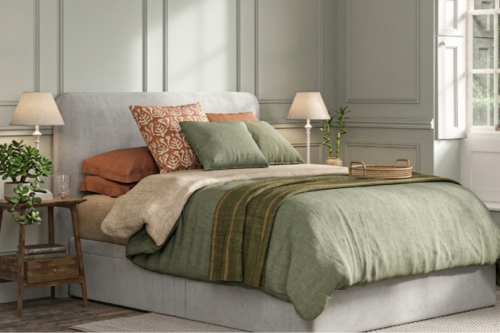
Bringing natural elements into your bedroom connects the space with the earth's positive energy and promotes harmony and balance. This can be as simple as introducing a houseplant, choosing furniture in natural wood tones, or dressing your bed with linen or cotton in organic, earthy shades.
Plants such as jade, bamboo, and orchids are considered particularly auspicious in Feng Shui, believed to attract good fortune and positive energy while also purifying the air. One or two plants is ideal, enough to bring life and vitality into the space without overwhelming it with too much active energy.
Natural wood furniture, rattan accessories, and breathable natural fabrics all reinforce the connection to the organic world, adding warmth and texture while supporting a calm, grounded atmosphere.
12. Bring in Fresh Flowers (and Keep Them Fresh)
Fresh flowers are a simple way to elevate the energy in your bedroom. Choose blooms you're drawn to and place them where they can be seen from the bed.
The key rule in Feng Shui is to dispose of flowers as soon as they begin to wilt - dying flowers carry stagnant, declining energy. Always keep the water clean and refresh the arrangement regularly.
13. Limit Electronics
Televisions, computers, tablets, and mobile phones are one of the most common sources of bad Feng Shui in modern bedrooms. These devices emit electromagnetic fields that can disturb sleep, and their presence keeps the mind alert and stimulated rather than winding down.
Keep your bedroom free of screens where possible. Swap your phone alarm for a traditional alarm clock so you can leave your phone in another room overnight. If a TV in the bedroom is non-negotiable, consider housing it inside a fitted wardrobe or cabinet so it can be concealed when not in use.
14. Be Mindful of What Hangs Above You
Anything that looms or hangs directly over your bed can create a sense of unease, even subconsciously. This applies to heavy light fittings or chandeliers positioned directly above the bed, low ceiling beams or soffits, and sloped ceilings that angle down over where you sleep.
If your bedroom has exposed beams or a sloped ceiling, consider repositioning your bed to the part of the room where the ceiling is at its highest and most open. Soft furnishings, canopies, or light-coloured paint on the ceiling can help soften the effect where repositioning isn't possible.
What to Avoid In Feng Shui
Alongside the positive steps above, these are the specific arrangements and features that Feng Shui practitioners consistently advise against.
Don't place your bed directly in line with the door. This is the coffin position, one of the most important rules to follow.
Don't position your headboard on a wall shared with a toilet. This is believed to drain good fortune. If your bedroom adjoins a bathroom, try to ensure the headboard wall is not the one that backs onto the toilet or shower.
Don't hang a chandelier or heavy light fitting directly over your bed. The subconscious sense of something heavy hanging above you can disturb sleep and create anxious energy.
Don't push one side of your bed against the wall. Ideally your bed should have space on three sides, left, right, and foot, to allow energy to circulate freely.
Don't place water features or artwork depicting large bodies of water in the bedroom. Water elements are positive in other areas of the home, but in the bedroom they introduce too much flowing yang energy, which can be unsettling for sleep.
Don't use broken or heavily tarnished mirrors. These are considered bad Feng Shui regardless of placement.
The Benefits of Good Bedroom Feng Shui
A well-arranged, clutter-free bedroom with considered colours, natural materials and intentional furniture placement actively supports deeper sleep, lower stress levels, and a greater sense of calm and control.
For couples, Feng Shui principles can also nurture connection and equality within the relationship. Making even a handful of the changes above can produce a shift in how your bedroom feels, and how you feel within it.
Create Your Perfect Feng Shui Bedroom with Willow & Hall
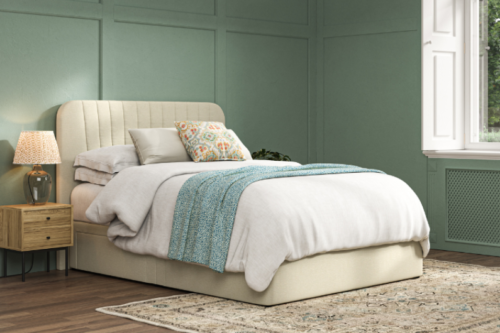
The Boscombe Divan Storage Bed in Weave Oat
Explore our bedroom furniture today and find pieces that help you achieve your Feng Shui goals. Looking for a handmade bed that promotes restful sleep, a beautifully crafted headboard for stability and support, or storage solutions that keep clutter at bay and energy flowing freely.
Our sofa beds and chaise storage sofa beds offer practical solutions for smaller spaces or guest rooms, without compromising on the calm, considered aesthetic that good Feng Shui requires.
Frequently Asked Questions
What is the correct Feng Shui for a bedroom?
Good bedroom Feng Shui centres on placing your bed in the commanding position (facing the door but not in line with it), keeping the space clutter-free, using soothing colours, limiting electronics, and incorporating natural materials. The goal is a room where energy flows freely and you feel supported, calm, and at ease.
What direction should your head not face when sleeping?
The most important rule is not to sleep with your feet pointing directly at the door. This is known as the coffin position and is considered deeply inauspicious. Facing south with your headboard is generally considered the most auspicious orientation, though the commanding position takes precedence over compass direction.
What can I put in my bedroom for good luck?
Plants such as jade, bamboo, and orchids are considered lucky in Feng Shui, as are pairs of objects (symbolising partnership and balance), fresh flowers, and artwork depicting positive, uplifting scenes. Crystals, candles in warm tones, and natural wood elements are also commonly used to attract positive energy.
What should you not put in your bedroom according to Feng Shui?
Avoid exercise equipment, large bookshelves, work desks positioned next to the bed, mirrors facing the bed, electronics such as TVs and computers, water features, and anything stored under the bed that carries heavy emotional associations. Clutter in any form is one of the biggest sources of bad Feng Shui.
Does Feng Shui really work?
Feng Shui's roots are philosophical rather than scientific, but many of its principles align closely with what we know about good sleep hygiene and interior design psychology. A decluttered, thoughtfully arranged bedroom with calming colours and natural materials will almost certainly feel better to live in, whatever framework you use to arrive at those choices.
8 Comments