


Not every home is blessed with floor-to-ceiling windows, and even the most beautifully designed room can feel a little flat when natural light is in short supply. North-facing aspects, period properties, narrow terraced houses, basement flats and gloomy British winters can all leave certain rooms feeling darker than we'd like, but the good news is, you don't need to knock down walls or fit new windows to make a difference.
Learning how to make a dark room brighter is often about a series of small, considered changes rather than one big overhaul. By rethinking the colours, fabrics, finishes and furniture in a space, you can completely transform how a room feels, often in an afternoon. Dark colours and heavy textures tend to weigh a room down, while lighter tones and reflective materials help bounce light around and open things up.
If you're looking for furniture that can help brighten a dark room, take a look at our range of luxury sofas, sofa beds and armchairs and more, all available in our collection of over 150 fabrics, so you can choose tones and textures that suit your space beautifully.
Below, you'll find simple ways to brighten a room, from quick fixes you can try this weekend to more considered changes that have a lasting effect, including what to do if your room has little or no natural light at all.
Simple Ways to Brighten a Room
Before getting into bigger changes, there are a handful of simple ways to brighten a room that take almost no time at all:
- - Clean your windows inside and out - you'll be surprised how much more light comes through, especially in winter.
- - Swap heavy curtains for sheers or light linens to let daylight filter through gently.
- - Move tall furniture away from windows so it isn't blocking the light at source.
- - Add a large mirror opposite the window to bounce daylight back into the room.
- - Switch to lighter lampshades in cream, linen or pale paper for a softer, wider light spread.
- - Declutter surfaces - busy shelves and crowded tabletops absorb and trap light.
If you only have an hour to spare, even one or two of these will lift the room noticeably. From there, the rest of this guide explains how to lighten a dark room more fully, step by step.
Start by Maximising the Natural Light You Already Have
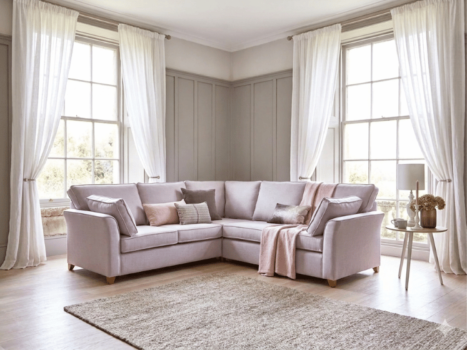
The Elmley Corner Sofa/Sofa Bed
Before adding anything new, it's worth making the most of the daylight your room already receives. Heavy curtains, half-drawn blinds and grubby window panes can all quietly steal light from a space without you realising.
A few simple changes make a noticeable difference:
- - Swap heavy curtains for sheers or light linens. These let daylight filter through gently while still offering privacy and softness at the window.
- - Choose curtain poles that extend beyond the window frame. This means when the curtains are open, they sit against the wall rather than blocking the edges of the window.
- - Keep the glass clean. It sounds obvious, but a clean window can let in noticeably more light, especially in winter when the sun sits lower.
- - Pull furniture away from the window. Tall pieces placed in front of or beside a window can cast unhelpful shadows across the rest of the room.
If your room sits next to a brighter space, you might also consider whether internal glazed doors, glass panels or a borrowed light could allow daylight to travel further into your home.
How to Lighten a Dark Room With Mirrors
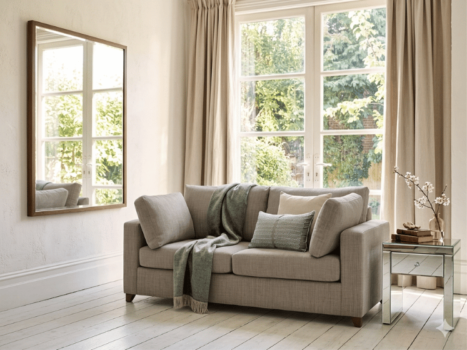
The Somerton Sofa/Sofa Bed
Mirrors are one of the quickest and most effective ways to make a dark room brighter. As well as being beautifully decorative, they reflect both natural and artificial light, helping to double the brightness of a space and make it feel more open.
For the best effect, position a large mirror directly opposite a window so it can bounce daylight back into the room. In the evening, the same mirror will reflect the glow from your lamps and ceiling lights, helping the room feel softly lit rather than gloomy.
If a single statement mirror feels too dominant, a curated grouping of smaller mirrors can have a similar effect while adding character to the wall. Mirrored or glass-topped furniture, such as a side table or console, can also help light travel further around the room.
Layer Your Lighting to Brighten the Whole Room
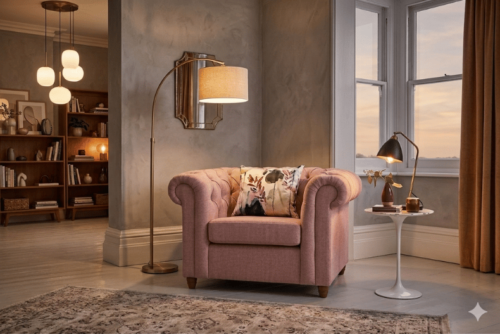
The Bulford Armchair
One of the most common reasons a room feels dark is that it's lit by a single ceiling light. A central pendant can flatten the space, leaving the corners in shadow and making the room feel smaller than it is. A much better approach is to layer different light sources at different heights, so light reaches every part of the room.
A well-lit room usually combines three types of lighting:
- Ambient lighting - your main source of overall illumination, often a ceiling light or pendant.
- Task lighting - focused light for specific activities, such as a reading lamp beside an armchair or a bedside lamp on your bedside table.
- Accent lighting - softer, decorative light that highlights features, fills dark corners and adds atmosphere.
Within these, uplighters are especially useful when you're trying to lighten a dark room. Unlike traditional table lamps or downlights, uplighters direct light towards the ceiling, eliminating shadows and making rooms feel taller and airier. We'd recommend placing them in corners or behind larger furniture to bounce light off the walls and ceiling.
Floor lamps are another easy win. Simply pop one behind an armchair, another in the gloomiest corner, and a third near a sofa or sideboard, and you'll be surprised how much warmer and brighter the room feels.
It's also worth paying attention to your bulbs and shades. Pale linen or cream paper lampshades let light pass through gently, giving a softer, wider spread. For bulbs, look for warm white LEDs around 2,700K-3,000K for a cosy living room feel, or step up to 3,500K-4,000K for spaces where you want a fresher, more daylight-like quality.
How to Lighten a Dark Room With Little or No Natural Light
Some rooms, such as internal hallways, basement flats, north-facing studies, windowless bathrooms or box rooms, receive very little natural light at all. The good news is that these spaces can still feel bright, calm and welcoming with the right approach. The key is to stop trying to imitate daylight from a single source, and instead build brightness from multiple directions.
Here's how to lighten a dark room with no natural light:
Lean fully into layered lighting
Without daylight to rely on, you'll need ambient, task and accent lighting working together. Aim for at least three light sources in the room.
Choose daylight-leaning LED bulbs
A cooler colour temperature (around 4,000K) mimics natural daylight more closely than warmer bulbs, which is especially useful in rooms that never see the sun.
Use mirrors to multiply your artificial light
Place mirrors opposite lamps or wall lights rather than windows, they'll bounce the light around just as effectively.
Paint walls and ceilings in soft whites or warm off-whites
In rooms with no natural light, deeper paint colours absorb the limited light available, making the space feel smaller.
Choose lighter floors and rugs
Pale wood, light tiles or a soft cream rug will reflect light back upwards.
Borrow light from neighbouring rooms
Internal glazed doors, frosted glass panels or even a glazed transom above a doorway can let light travel from brighter parts of the home.
Keep things minimal
Clutter, dark accessories and busy walls visually shrink a windowless room. A pared-back look helps the space feel airier.
For rooms with little (but not zero) natural light, like a north-facing living room or a small flat with one window, the same principles apply, but you can lean a little more into warm whites and natural textures to keep the space feeling cosy rather than clinical.
Choose Lighter Colours and Matte Finishes
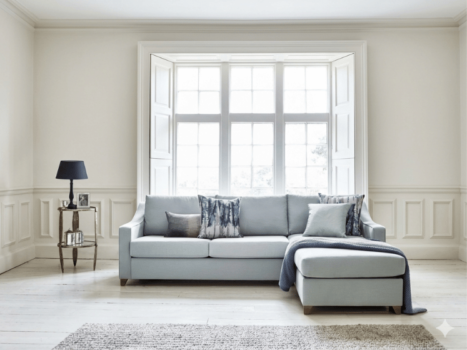
The Bermerton Chaise Sofa/Sofa Bed
The colours on your walls, ceiling and larger pieces of furniture have an enormous impact on how light a room feels. Pale tones, such as soft whites, warm creams, gentle off-whites, pale greys, and chalky pastels, reflect light far more effectively than darker shades, helping a room feel airier and more open.
Painting the ceiling in a brighter white than the walls is a simple trick that can lift a low or shadowy room instantly. If white feels too stark, a soft, warm off-white achieves the same effect with a little more warmth.
Counter-intuitively, matte finishes often work better than gloss in genuinely dark rooms. Glossy surfaces can create harsh highlights and reflections that draw attention to how little light there is. Matte and soft sheen finishes diffuse light more evenly across the surface, helping the whole room feel softly bright rather than patchy.
Pick Fabrics and Textures That Reflect Light

The Elmley Sofa/Sofa Bed
Just as walls and finishes affect how light moves around a room, so do the fabrics on your sofa, curtains, cushions and bedding. Heavy, dark fabrics tend to absorb light, while lighter, softer textures reflect it back into the room.
When choosing upholstery to brighten a dark room, look for:
- Lighter colour palettes - oat, stone, linen, dove, soft blush, pale sage and seafoam all sit beautifully in less sunny rooms.
- Natural fibres with a subtle texture - linen, cotton, brushed weaves and soft chenilles add warmth without weight.
- A mix of textures rather than one heavy fabric - pairing a linen sofa with a soft wool throw and a lighter velvet cushion keeps the room feeling layered but airy.
At Willow & Hall, our fabric collections include over 150 options, with a wide range of lighter tones and textures perfect for brightening up darker rooms. If you're not sure which to choose, you can order free fabric samples to see how different finishes look in your space at different times of day.
Be Thoughtful with Artwork and Accessories
As lovely as it is to personalise your walls with art and photos, too much can actually make a room feel darker. Paintings, prints and framed photos absorb light rather than reflect it, especially when they're framed with dark borders or covered in glass that creates shadow.
In a darker room, less is often more. One larger, lighter-toned piece of artwork can have far more impact than a busy gallery wall, and leaves more wall space free to reflect light.
The same applies to accessories. A few well-chosen pieces in lighter tones, ceramics with a soft sheen, glass vases, and small metallic accents (brass, copper, polished nickel) all catch and reflect light beautifully. Heavy, dark ornaments tend to do the opposite.
Choose Furniture That Works With the Light, Not Against It
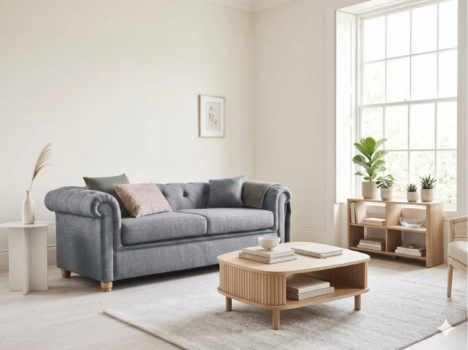
The Haxton Sofa/Sofa Bed
Furniture has a bigger effect on how bright a room feels than people often realise. Bulky, dark, heavy pieces visually weigh a room down, while lighter, more elegantly proportioned furniture allows light to travel further around the space.
A few things worth thinking about:
- - Lighter upholstery colours make a sofa or armchair feel less dominant in a dark room.
- - Slimmer, raised legs on sofas, armchairs and beds allow light to flow underneath rather than being blocked, helping the floor feel more open.
- - Considered scale matters - an oversized sofa in a small, dark room can feel oppressive; a slightly more compact design often suits the space better.
- - Multi-functional pieces like an ottoman or a sofa bed can help reduce visual clutter, keeping the room feeling clearer and lighter.
Our handmade sofas and armchairs are designed with these kinds of considered proportions in mind, and can be personalised in your choice of lighter fabrics, cushion fillings and finishes, so you can choose pieces that work beautifully with the light in your room.
How to Brighten Up a Dark Living Room
Living rooms are often the rooms we want to feel brightest and most welcoming, but they're also one of the spaces most likely to have a large, dark sofa, heavy curtains or busy walls. If you're wondering how to brighten up a dark living room specifically, a few targeted changes can make a real difference:
- Rethink your sofa colour - A lighter sofa in linen, oat, dove grey or soft sage can completely change the feel of a dim living room. Our handmade sofas come in over 150 fabrics, so it's easy to find a lighter tone that still suits how you live.
- Add a large mirror above the fireplace or mantel - This is often the natural focal point of a living room and the perfect place to reflect light back into the space.
- Use a pair of table lamps either side of the sofa - Symmetrical lighting creates balance and stops one half of the room feeling darker than the other.
- Add a floor lamp behind an armchair - This lifts the lighting up off the floor and casts a softer glow across the room.
- Lighten your rug - A pale wool or natural fibre rug reflects light upwards and opens up the floor.
- Keep coffee tables clear - A cluttered coffee table can quietly weigh down a living room. Keep it simple with one or two carefully chosen pieces.
Add Light, Life and Reflection With Plants and Greenery
It might sound counter-intuitive, but the right plants can actually help a dark room feel brighter and more alive. Greenery introduces natural texture and movement, lifts the overall mood of the space and pairs beautifully with lighter walls and softer fabrics.
For genuinely dark rooms, look for plants that thrive in lower light, such as snake plants, ZZ plants, pothos, peace lilies and cast iron plants. Place them in pale ceramic or rattan pots to keep the look airy, and consider grouping a couple on a side table or chest of drawers near a mirror. The reflection adds depth and a sense of light.
Bringing It All Together
You don't need to do everything on this list to make a difference. Even one or two changes, such as a large mirror opposite the window, a pair of softer linen curtains, a lighter sofa fabric, or a thoughtfully placed floor lamp, can completely transform how a dark room feels.
Start with the simple wins first. Clean your windows, layer in a few extra light sources, and see how the room feels in the evening. Then move on to bigger choices like colour, fabric and furniture. Over time, you'll build a space that feels warm, inviting and full of light, whatever the weather outside.
If you'd like a little help choosing furniture and fabrics that will work beautifully in a darker room, our friendly team is always happy to chat through your options, or you can order free fabric samples to try at home.
20 Comments